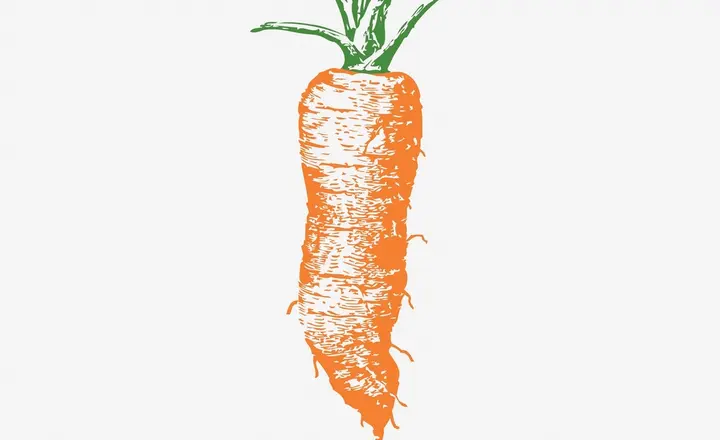
Quick answer
Sow carrots directly where they will grow in deep, loose soil with no fresh manure and as few stones as practical. Keep the seed row damp during the slow germination period, then thin seedlings to the final spacing before roots become crowded. Use insect-proof mesh from sowing to harvest where carrot fly is present.
The variety must suit the root zone. Long cultivars need deep, friable soil; short or round carrots are more reliable in shallow, stony or heavy ground and in containers. Maintain steady moisture as roots enlarge, because a sudden soaking after drought can split them.
Match the variety to the soil
Carrots range from small round and stump-rooted types to long tapering storage roots. Choose short-rooted cultivars for pots, raised beds with limited depth and difficult soils. Reserve long types for ground that can be prepared deeply without compact layers or stones.
Early cultivars mature quickly and are usually eaten young. Main-season cultivars occupy the ground longer and include varieties bred for winter storage. Sow modest batches rather than an entire packet at once if the aim is a continuous supply.
The RHS carrot guide notes that small batches every three to four weeks can extend harvests. Adjust that pattern for heat: germination and root quality often decline in very hot, dry soil.
Prepare a clean root zone
Choose an open site with direct sun, although carrots can tolerate light partial shade. Work the soil only when it is neither saturated nor powder-dry. Break compacted clods and remove larger stones from the main root depth without pulverising the soil structure.
Avoid freshly manured beds. High fertility and undecomposed organic matter can encourage forked, hairy roots and excessive top growth. Mature compost can improve poor structure, but the objective is a uniform root zone rather than the richest bed in the garden.
The University of Minnesota Extension advises direct sowing because carrots do not transplant well. Root disturbance at the seedling stage can permanently fork or deform the storage root.
Sowing, germination and thinning
Make a shallow drill about 1cm deep, water it, sow thinly and cover with fine soil. Mark the row because weeds may emerge before the carrots. Keep the upper soil consistently damp until seedlings establish; a dry crust during germination can cause a patchy row.
Thin gradually to approximately 5–8cm, or the spacing stated for the cultivar. Remove the weakest seedlings without disturbing the roots retained. Thin in still, damp weather if possible, clear away pulled foliage and replace protective mesh promptly because damaged foliage releases a strong scent.
Weed by hand close to the row. Deep hoeing can cut shoulders and side roots. A narrow band kept weed-free early is more important than aggressive cultivation after the canopy develops.
Growing carrots in containers
Use a container with drainage holes and enough depth for the selected root shape. A broad vessel at least 30cm wide accommodates a useful group of short or intermediate carrots; very long cultivars need greater depth. Fill it with a fine, free-draining potting medium rather than heavy garden soil.
Sow across the surface at the final intended spacing where possible. Container carrots depend entirely on the grower for water, so check below the surface frequently. Water gently enough that seeds and exposed shoulders are not displaced.
Do not judge container capacity by seed count. Dozens may germinate, but each storage root requires its own cylinder of space. Overcrowding produces small or twisted roots and makes moisture harder to manage.
Watering and crop protection
Established carrots tolerate brief dry periods, but useful roots form best with steady growth. Water deeply during prolonged drought rather than applying a daily surface sprinkle. In containers, water more frequently because the root zone is limited.
Carrot fly larvae tunnel into roots and allow secondary rots to enter. The most dependable physical control is a fine insect-proof mesh sealed at the edges and left in place. Low barriers are less reliable than complete coverage. Rotate carrots and related crops where possible, but do not treat rotation alone as protection from adult flies arriving from nearby ground.
Slugs and snails can remove seedlings. Crusting soil, damping-off, seed age and insufficient moisture can also create gaps, so inspect the row before assuming a pest is responsible.
Diagnosing root and foliage problems
| Symptom | Likely causes to investigate | First checks |
|---|---|---|
| Forked or branched roots | Stones, compaction, fresh manure or early root damage | Soil profile and amendment history |
| Long tunnels with rusty staining | Carrot fly larvae | Mesh integrity and whether damage begins near the surface |
| Split roots | Heavy water uptake after drought or over-maturity | Recent rainfall and irrigation pattern |
| Green shoulders | Root crowns exposed to light | Soil settlement and sowing depth |
| Hairy roots | Excess nitrogen, poor drainage or root stress | Fertility inputs and moisture |
| Sparse emergence | Dry seedbed, crusting, old seed or pests | Moisture history, seed age and soil surface |
Cover exposed shoulders with soil to prevent greening. A misshapen carrot remains edible if sound, but discard roots with active rot, extensive tunnelling or an unexplained bitter taste.
Harvest and storage
Harvest as soon as roots reach a useful size rather than waiting for maximum diameter. Loosen heavy soil with a fork before pulling so long roots do not snap. Watering a very dry bed the day before harvest can make lifting easier, but avoid saturating roots intended for storage.
For short-term use, remove the leafy tops because they continue drawing moisture from the root. Store clean, undamaged carrots cool and humid. For longer storage, layer sound roots in slightly damp sand or another suitable medium so they do not touch, and inspect them periodically.
In free-draining ground, maincrop carrots can sometimes remain under protective mulch into winter. Lift them instead where soil becomes waterlogged or where pest pressure is high. Record sowing date, variety and harvest quality so future sowings can be timed to the actual site.
Sources and review basis
- How to grow carrots — Royal Horticultural Society
- Growing carrots and parsnips in home gardens — University of Minnesota Extension
Ranges are starting points. Cultivar instructions, the measured root-zone condition and reliable regional pest guidance take precedence where they are more specific.