Why soil temperature matters
Seeds germinate in the soil, not in the air. A mild spring day can sit above 15°C while the ground at sowing depth is still below 7°C. Sowing warm-season crops into cold soil can lead to slow, uneven germination, while damp, cold conditions can increase the risk of rot and damping-off. Warming cold soil towards a crop's suitable germination range can help, but warmer soil does not always mean faster or more even germination. Time sensitive sowings using crop guidance and soil conditions rather than the calendar or air temperature alone.
Soil temperature can lag changes in air temperature. Sunlight, shade, moisture, soil characteristics and bed aspect can affect warming, so colour or texture alone does not establish which bed will be warmer. Measure the intended bed at sowing depth and compare the reading with guidance for the crop.
How to take an accurate reading
1. Choose the measurement depth. For a particular sowing, use the depth specified for that crop; for a standard garden-soil comparison, use a consistent depth such as 5 or 10 cm and label the reading accordingly. 2. Position the sensing area at that depth, following the instrument's insertion instructions. Leave the probe in place until the display or pointer stops changing. Stabilisation time varies by instrument, so follow its instructions rather than assuming a fixed response time for dial or digital models.
3. Measure several locations in the intended bed, including its cooler areas, using the same sensing-area depth. Check the actual light, shade and soil conditions in which you intend to sow; one warm spot does not represent the whole bed. 4. Record each reading, its location, depth, date and time, together with soil moisture, light or shade, recent rain and unusually hot or cold weather. Readings after rain or during a hot midday period can describe actual conditions, but record those circumstances and repeat the measurements before drawing conclusions about sustained warmth. 5. Compare repeat readings at the same locations, depth and a similar time of day. If readings are borderline or conditions unusual, wait a day or two and measure again before deciding to sow.
Soil temperatures for common crops
The seed-sowing entries below distinguish approximate germination thresholds from suggested sowing targets; these are not interchangeable. The numerical values are not verified by specific passages cited on this page. Cultivars and local climates vary, so confirm guidance for the particular crop and cultivar against the seed packet. These temperatures do not establish transplanting readiness. Seed-potato planting is separate from seed sowing: the guidance of workable soil around 7°C or above is also unverified by a specific cited passage.
- Peas, spinach, lettuce — approximate germination threshold: around 5°C. This describes possible germination, not a target for quick, even emergence or a sufficient reason to sow. Confirm the crop and cultivar's seed-packet guidance and check that the ground is workable.
- Carrots, onions, beetroot — low-temperature guidance: germination is described as slow below about 7°C, not impossible. Suggested sowing target: 10°C or more, subject to the crop and cultivar's seed-packet guidance; this is not a guarantee of even germination.
- Transplanting distinction — the seed-germination guidance in this list does not establish when plants are ready to transplant outdoors. Consult separate crop-specific transplanting guidance.
- Beans, sweet corn — lower sowing guide: 10°C or above; suggested warmer sowing target: 15°C. These are not verified minimum germination thresholds, and 15°C does not guarantee quick, even germination. Check the particular crop and cultivar's seed packet.
- Tomatoes — unverified approximate minimum for outdoor seed sowing: 10°C; suggested sowing target range: 15 to 21°C. A minimum is not a recommendation to sow at that temperature. Confirm cultivar and seed-packet guidance; these are not transplanting temperatures.
- Peppers, aubergines, courgettes and squash — suggested sowing guide: 16 to 18°C or above, without crop-specific verification. This is not an established minimum germination threshold or a claim that ever-higher temperatures are suitable. Confirm the appropriate range for each crop and cultivar against the seed packet.
Dial versus digital
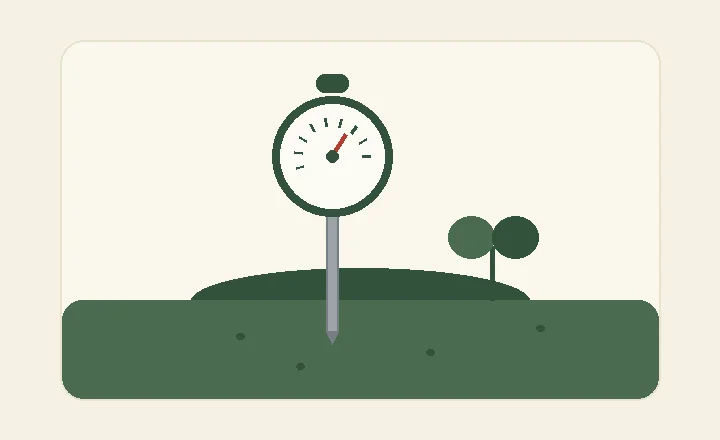
A dial (bimetallic) soil thermometer uses a pointer and needs no batteries; read the face at eye level once the pointer has settled. A digital thermometer displays a number; check its battery or other power requirements. For either type, compare display readability, the sensing area's position and suitability for your intended measurement depth, and the manufacturer's stated accuracy over the temperatures you need to measure. Check insertion, cleaning, water-resistance and storage requirements before buying. Neither instrument type alone guarantees accuracy, durability or reliability.
When a thermometer won't solve the problem
A soil thermometer helps identify ground that is too cold for a crop; it cannot make it ready. If the soil is too cold for the crop you want to sow, either choose a crop that tolerates cool soil or consider warming the ground. A cloche, cold frame, horticultural fleece, dark mulch or black plastic may help warm a bed in spring, but the effect depends on conditions: measure at the intended sowing depth to check. An air thermometer or a weather forecast is not a substitute, because the air can be warm while the soil stays cold. Do not chase a warm reading by sowing into waterlogged ground just because the number looks right — workable, well-drained soil matters as much as temperature.
Care and maintenance
Follow the manufacturer's instructions for removing soil, cleaning, drying, storage and battery care. Protect the probe from damage and observe the stated water-resistance limits. Use the manufacturer's recommended accuracy-check procedure. A water comparison is appropriate only if the probes are suitable for immersion and the procedure is permitted; keep non-immersible parts dry and use a reference thermometer with established accuracy at the comparison temperature. An unverified dial thermometer is not a reference standard. Disagreement between two instruments does not identify which is inaccurate. If a probe is bent, a pointer sticks or readings appear unreliable, stop relying on the instrument for sowing decisions until it has been checked, repaired or replaced as appropriate.
Sources and evidence limitations
- University of Minnesota Extension, soil temperature and planting — reference link for soil temperature and planting. This page does not cite specific passages verifying the individual crop temperatures or measurement guidance.
- Royal Horticultural Society, vegetable growing advice — general vegetable-growing reference. This page does not cite specific passages supporting its sowing and soil-warming statements.
These general reference links do not verify each crop temperature, its meaning and qualifications, or the instrument claims on this page. The numerical values should not be treated as collectively conservative sowing thresholds. Cultivars and local climates vary, so confirm guidance against the seed packet. A review against these sources in August 2026 has not been confirmed.