What a broadfork is
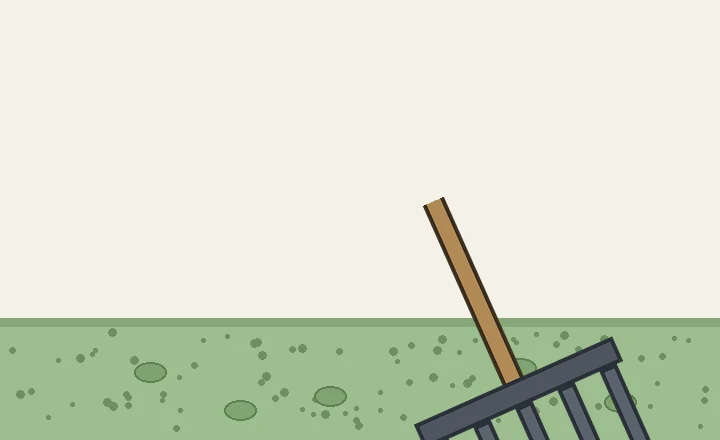
A broadfork, also called a broad fork, has a horizontal bar carrying several long, strong tines and a tall handle at each end. The bar is built to take the weight of your boot as the tines enter the ground, and the two handles give leverage when you pull them back. It is a loosening tool, not a lifting tool: it fractures soil in place instead of bringing the lower layers to the surface.
Why loosen without turning
Repeatedly inverting the soil can disrupt its structure, bring buried weed seeds up to germinate, and bury surface organic matter. Broadforking loosens soil without turning the layers over, but still disturbs it. Where loosening is needed, it may help aeration and water movement if the affected layer is within tine reach and workable without forcing the tool. It does not resolve every compacted layer or drainage problem; see Repairing Compacted Soil and Diagnosing Waterlogged Vegetable Beds for diagnosis. Treat broadforking as targeted loosening rather than routine preparation of established no-dig beds. See No-Dig Vegetable Gardening for the broader approach.
How to use a broadfork
1) Check conditions and services: work when the soil is moist but not waterlogged, so it fractures rather than smears. Check the area for buried irrigation, cables and other services before inserting the tines. 2) Position the tool: set the tines across the bed. 3) Insert the tines: step on the horizontal bar to press them into the soil. Do not force the tool; stop if it meets an obstruction. 4) Lever gently: pull both handles back together to lift and fracture the soil slightly without turning it over. Keep your back neutral and use your body weight rather than a twisting pull. Stop if you meet an obstruction or need to force the tool. 5) Withdraw: return the handles upright and withdraw the tines without twisting. 6) Make the next pass: move backwards along the bed, overlapping the previous pass, and repeat.
Opening a new bed
To open a new bed with minimal disturbance, remove persistent weeds and surface debris, then broadfork from one end in overlapping passes without lifting or flipping clods. Add compost or another suitable amendment at the surface after loosening. This is broadforking, not conventional double digging: double digging excavates the topsoil in sections so the subsoil can be loosened beneath it, whereas a broadfork can loosen the profile without first removing that upper layer.
Broadfork versus digging fork and spade
Choose by the task: a broadfork loosens soil in place without lifting and turning each section; a digging fork can lift root crops and turn compost; a spade can excavate soil where removal or turning is needed. See Digging Fork Guide for lifting and compost tasks, and Garden Spade Guide for excavation. Where a bed needs loosening without inversion, a broadfork is an option if the affected layer is reachable and workable without forcing the tool.
When a broadfork is the wrong tool
The wide head is awkward in narrow borders, containers and around dense root systems, where a digging fork or hand fork works better. It is also difficult to use in very stony ground or heavy clay when wet. Because the tool is heavy and the strokes are repetitive, take regular breaks and keep your back neutral; if you have a back condition, choose a lighter tool or get help with large areas.
Care and maintenance
Knock off clinging soil without striking the head against hard masonry, wash persistent dirt away and dry the metal before storage. Check that the tines are straight and firmly joined to the bar, and that both handles and their joints show no cracks or movement. Straightening hardened or damaged tines can cause them to fail, so seek a competent repair or replace the tool when necessary. Store the broadfork under cover, with a light coating of oil on non-stainless steel before long storage.
Sources and review basis
- University of Minnesota Extension, reducing tillage in your garden — general reduced-tillage context; broadfork construction and operating instructions are not substantiated here by source excerpts.
- Health and Safety Executive, manual handling technique — general manual-handling context, rather than broadfork-specific operating instructions.
- Penn State Extension, using the right tool is self-care — general tool-choice and self-care context; categorical comparisons between broadforks, digging forks and spades are not substantiated here by source excerpts.
- BBC Radio 4, Gardeners' Question Time, Lewes episode — gardening discussion; no excerpt is quoted here to substantiate advice on broadforking established beds.
The distinction between broadforking and conventional double digging follows the different physical operations involved: a broadfork loosens from the surface, while double digging excavates the upper layer to reach the subsoil. The references are listed by title and link, without excerpts substantiating every tool comparison or broadfork-specific instruction. General reduced-tillage and manual-handling references should not be read as verification of the complete operating sequence. This page was reviewed against the cited sources in August 2026.